
Best Exercises for Flexibility at Home
Flexibility is one of those things you only notice when it is missing. Reaching the top shelf feels harder, your lower back feels stiff after sitting all day, or your hips feel tight after a long walk. The good news is that you do not need a gym membership, special equipment or a huge amount of time to improve it. The best exercises for flexibility at home are simple, gentle and easy to fit into a normal day, and most people start to feel a difference within a few weeks of regular practice.
This guide brings together the most useful at-home flexibility exercises, explains how to do them safely, and gives you a simple routine you can follow three or four times a week. It is written for beginners, but the same principles work if you are already active and just want to move more freely.
General information disclaimer: This article is for general information only and is not medical advice. If you have an injury, a long-term health condition, persistent pain, or you are recovering from surgery, speak to a qualified health professional before starting a new stretching routine, and stop any movement that causes sharp or increasing pain.
What Flexibility Really Means
Flexibility is often described as how far you can stretch, but it is more useful to think of it as how easily your joints move through their normal range. Good flexibility helps you bend, twist, reach and squat with less effort, and it supports everyday activities such as getting out of a chair, carrying shopping, gardening and playing with children.
It is closely linked to mobility, which is your ability to move a joint actively and with control, rather than simply being pulled into a stretch. That is why the best home flexibility routines combine gentle stretches with slow, controlled movements. Stretching alone can lengthen tight muscles, but mobility work teaches your body to use that new range safely.
Age, sitting time, previous injuries and how active you are all affect flexibility. None of these is a fixed limit. Regular, gentle practice tends to matter far more than being naturally bendy, and small, consistent sessions beat one long, intense session followed by days of soreness.
Why Stretching at Home Works So Well
Home is an ideal place to work on flexibility because the barriers are so low. You need a small clear space, a mat or a rug, and comfortable clothes. There is no commute, no waiting for equipment and no pressure to keep up with a class. That makes it much easier to practise little and often, which is exactly what flexibility responds to best.
Home stretching also fits naturally around other habits. A ten-minute routine after a morning shower, a few hip openers while watching television, or a gentle wind-down stretch before bed can all add up. Because the movements are low impact, they suit many fitness levels, and you can adjust the intensity by changing how far you move into each stretch rather than by forcing anything.
There is a mental benefit too. Slow stretching encourages you to breathe steadily, notice where you hold tension, and slow down for a few minutes. Many people find that a short flexibility routine helps them feel calmer and sleep better, especially when it becomes part of an evening wind-down.
How to Stretch Safely
Safe stretching starts with warming up. Cold muscles are less willing to lengthen, so spend three to five minutes marching on the spot, doing gentle arm circles, walking around the room or doing slow leg swings before you stretch deeply. The warm-up should raise your body temperature slightly without leaving you out of breath.
Move slowly into each stretch and stop at the point where you feel a gentle pull, not pain. You should be able to breathe normally and even talk while holding a stretch. If you are holding your breath, shaking badly or feeling a sharp sensation, ease off. Flexibility improves when muscles feel safe enough to relax, and forcing a stretch usually has the opposite effect.
Hold most static stretches for about twenty to thirty seconds, breathing steadily throughout. Avoid bouncing, which can irritate muscles and joints. Breathe out as you ease a little deeper, but only if the stretch still feels comfortable. Stretch both sides of the body evenly, even if one side feels tighter, and keep your joints in a comfortable alignment rather than twisting them into awkward positions.
Finally, be patient with tight areas. Hamstrings, hip flexors and shoulders are commonly tight, especially for people who sit for much of the day. Progress is rarely linear: some days you will feel looser than others, and that is normal. Consistency over weeks matters more than how far you can reach on any single day.
The Best Exercises for Flexibility at Home
The exercises below cover the areas most people need: hamstrings, hips, lower back, chest and shoulders. You do not need to do all of them every time. Choose five or six that suit you, and rotate others in over the week.
1. Standing Hamstring Stretch
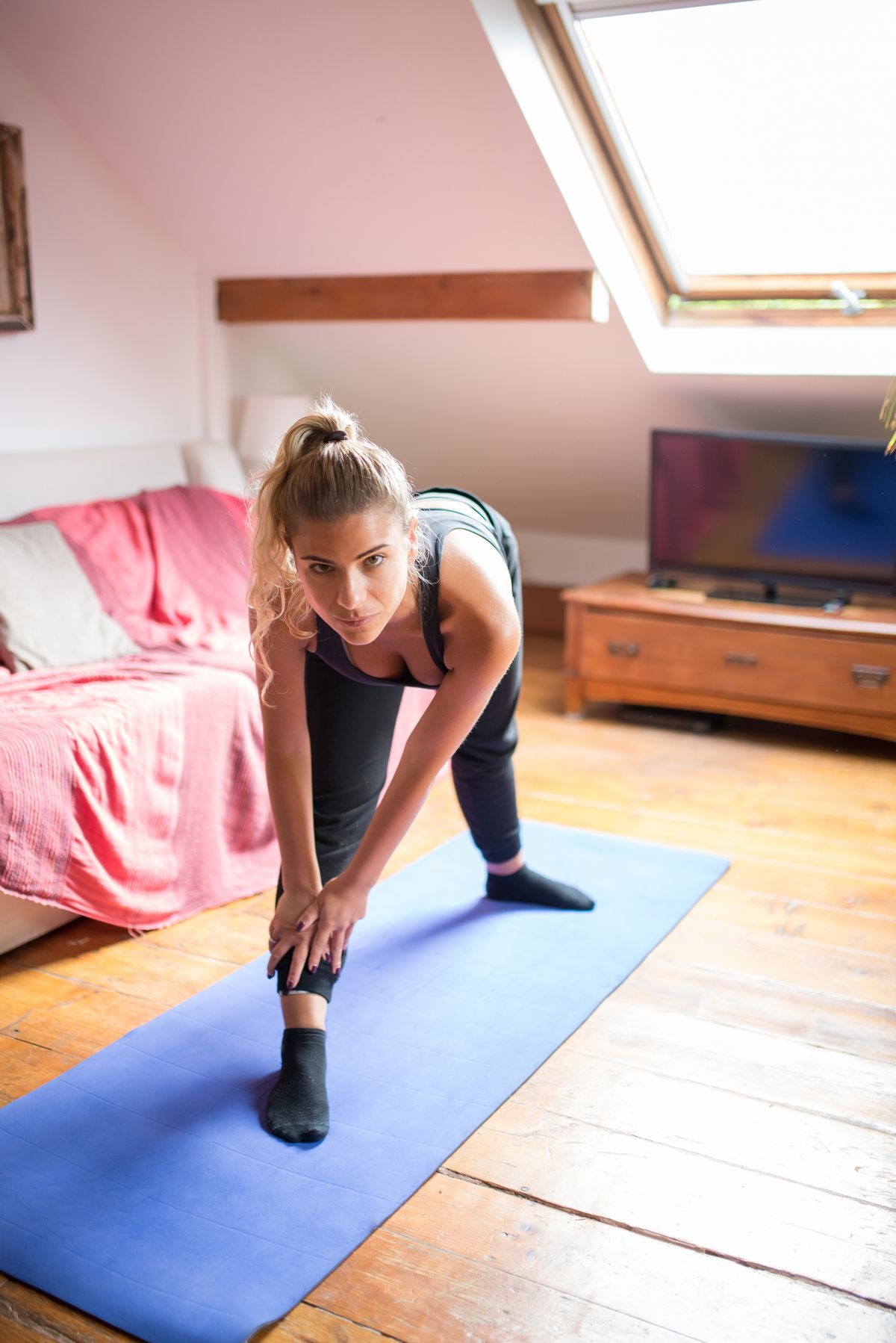
Stand with your feet hip-width apart. Step one foot slightly forward, keep that heel on the floor with your toes pointing up, and bend the back knee a little. Hinge gently forward from the hips with a straight back until you feel a stretch down the back of the front leg. Hold, breathe, then switch sides. This is a practical everyday stretch for people who sit a lot, and it is easier to control than a seated toe-touch.
2. Seated Forward Fold
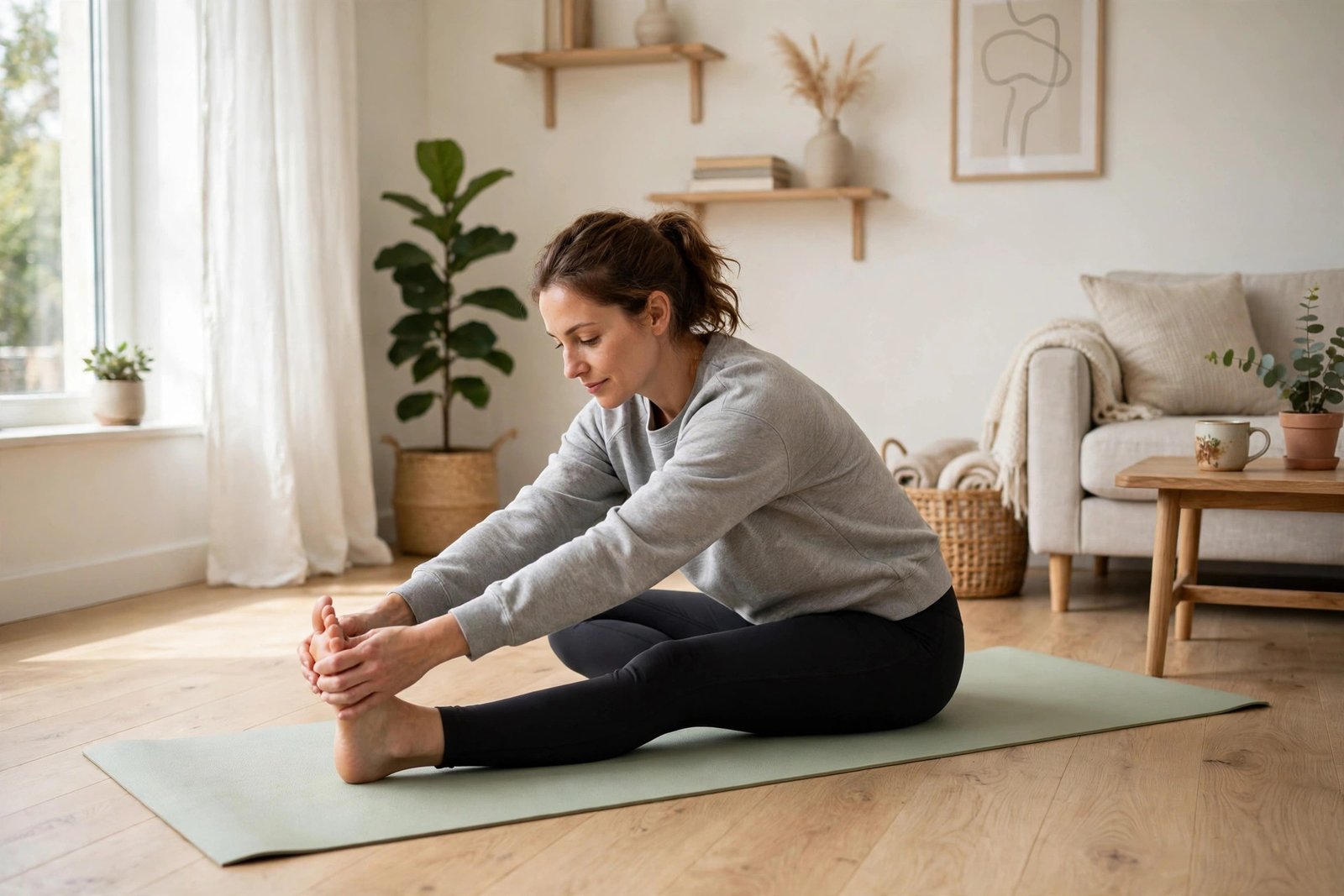
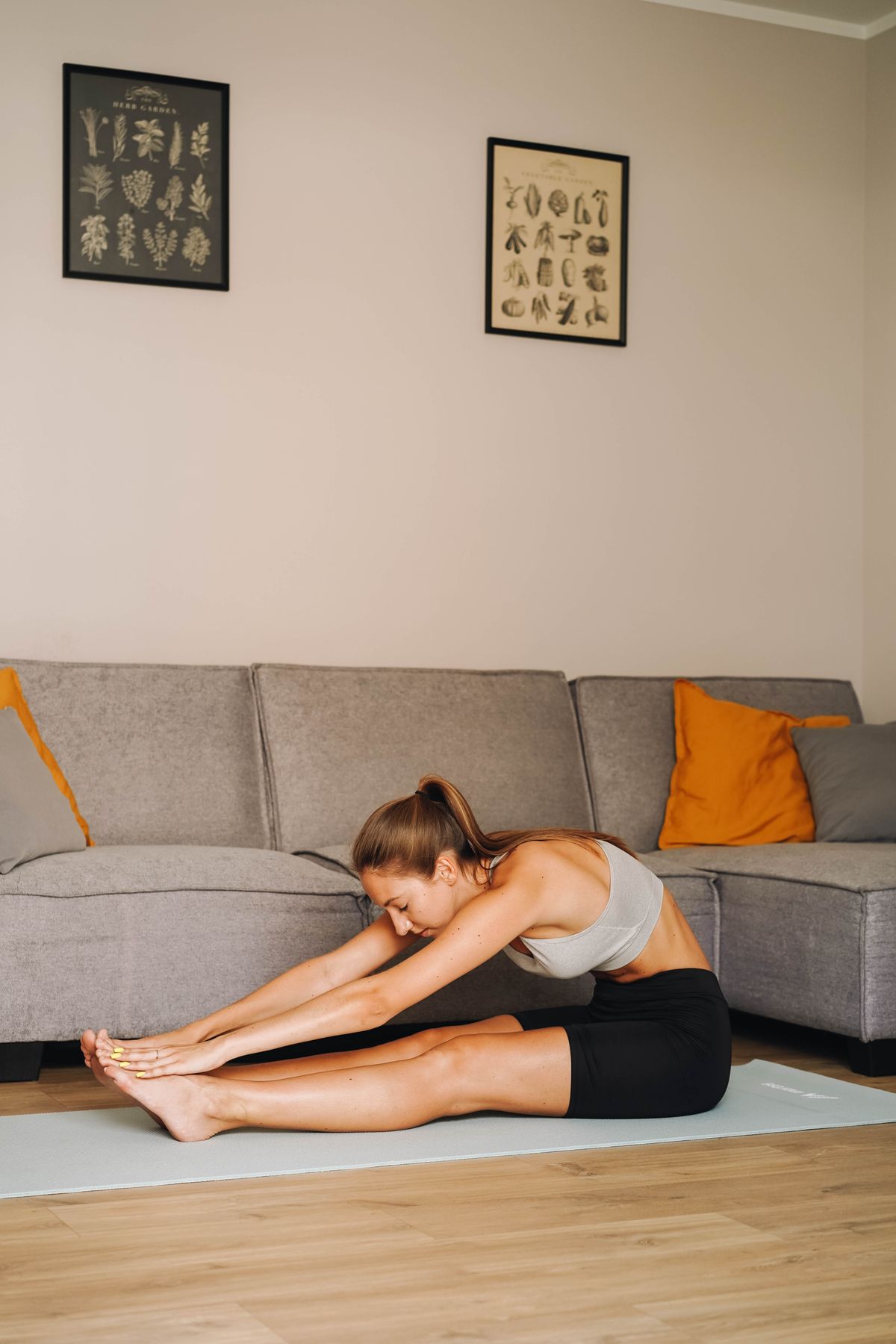
Sit on the floor or a mat with your legs extended in front of you. Sit tall, breathe in, and as you breathe out, hinge forward from the hips, reaching your hands towards your shins, ankles or feet, whichever you can reach comfortably. Keep a slight bend in the knees if your hamstrings are tight. This stretch works the whole back line of the body, from calves to lower back, and it is a good way to notice how your flexibility changes over time.
3. Kneeling Hip Flexor Stretch
Kneel on one knee with the other foot flat on the floor in front of you, as if proposing. Keep your chest tall and gently shift your hips forward until you feel a stretch at the front of the back hip. Keep your lower back long rather than arching it. Tight hip flexors are very common after long periods of sitting, and this stretch is one of the most useful at-home flexibility exercises for countering that stiffness.
4. Figure-Four Hip Stretch
Lie on your back with your knees bent. Cross one ankle over the opposite knee, flex the foot, and gently draw the lower leg towards you until you feel a stretch deep in the outer hip and buttock. Hold, breathe, and switch sides. This is a gentle, well-supported stretch that many people find helpful for hip tightness and lower-back comfort.
5. Cat-Cow Spinal Movement
Start on all fours with your hands under your shoulders and knees under your hips. As you breathe in, let your belly drop slightly and lift your head and tailbone. As you breathe out, round your spine, tuck your chin and draw your belly in. Move slowly and smoothly between the two positions for six to eight breaths. Cat-cow is a mobility exercise rather than a held stretch, and it is excellent for waking up a stiff spine in the morning.
6. Child’s Pose
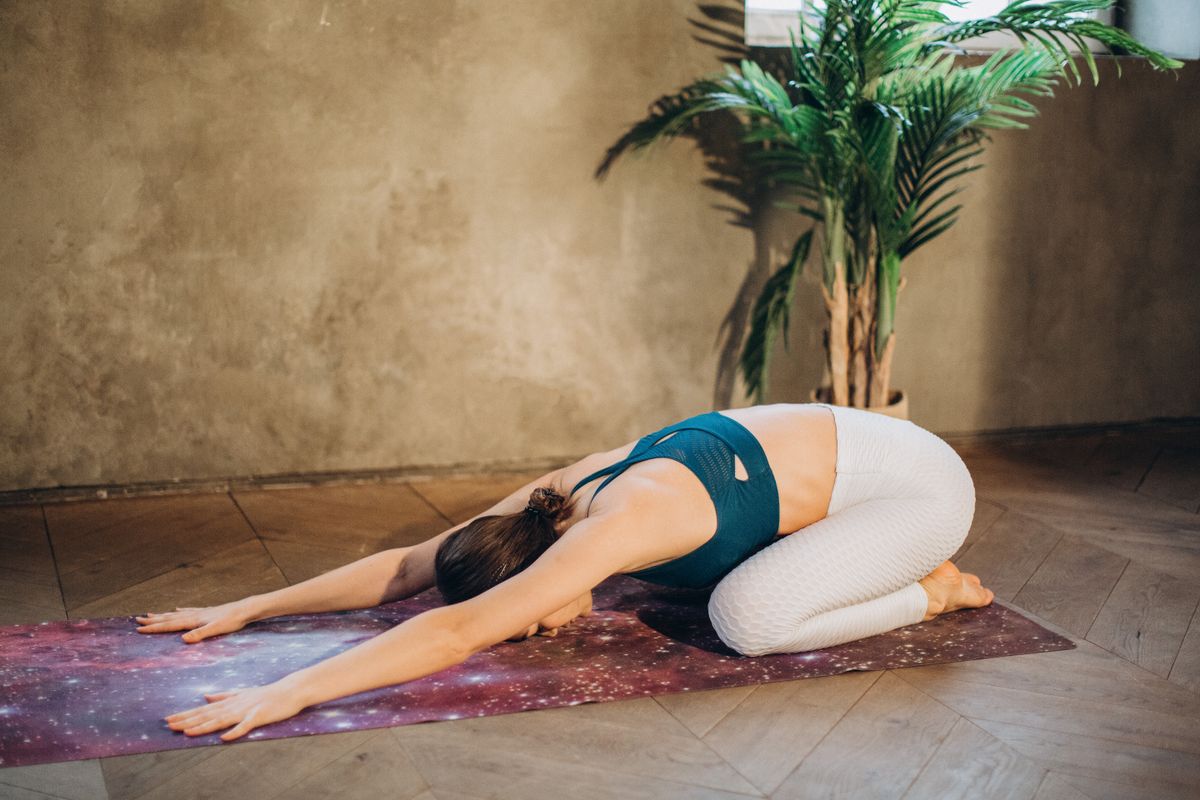
From all fours, sit your hips back towards your heels, extend your arms forward and rest your forehead towards the floor. Let your shoulders relax and breathe into your back. Child’s pose gently stretches the spine, hips and shoulders, and it doubles as a resting position whenever a routine feels too intense. Stay for thirty seconds to a minute, or longer if it feels comfortable.
7. Chest Opener Against a Door Frame
Stand beside a door frame, place your forearm against it with your elbow at about shoulder height, and gently turn your body away until you feel a stretch across the front of your chest and shoulder. This counters the rounded-shoulder posture that comes from desk work and phone use, and it helps the shoulders move more freely.
8. Shoulder and Upper Back Stretch
Bring one arm across your chest and use the other hand to gently draw it closer. Then interlace your fingers in front of you, press your palms away and round your upper back slightly, feeling a stretch between your shoulder blades. These small movements are easy to do at a desk and can relieve much of the tension that builds up in the neck and shoulders during the day.
A Simple 20-Minute At-Home Flexibility Routine
Here is a balanced routine that covers the whole body. Warm up for three minutes first, then work through the list, holding each stretch for twenty to thirty seconds per side where relevant.
- March on the spot and gentle arm circles — 3 minutes
- Cat-cow spinal movement — 6 to 8 slow breaths
- Standing hamstring stretch — each side
- Kneeling hip flexor stretch — each side
- Figure-four hip stretch — each side
- Seated forward fold
- Child’s pose — 1 minute
- Chest opener — each side
- Shoulder and upper back stretch
- Slow neck rolls and deep breathing to finish — 1 minute
Do this routine three or four times a week, and add a shorter five-minute version on other days if you like. If you are short on time, even ten minutes is worthwhile. The key is regularity: a routine you actually repeat will do far more than a perfect routine you only do once.
Flexibility Exercises for Hips and Lower Back
Hips and the lower back deserve special attention because they affect how you walk, sit and stand. When hip flexors and outer hip muscles are tight, the lower back often compensates, which can leave it feeling stiff or achy. Gentle, regular hip work therefore helps the whole body move better.
Alongside the kneeling hip flexor stretch and figure-four stretch above, try slow hip circles on all fours: keeping your hands and knees steady, lift one knee slightly and draw slow circles with it, first in one direction and then the other. This is a mobility movement, so keep it smooth and controlled rather than fast. A supine twist is another useful addition: lie on your back, draw both knees towards your chest, then let them fall gently to one side while your arms rest out to the sides, turning your head the other way if comfortable.
For the lower back itself, gentle movement is usually more helpful than aggressive stretching. Cat-cow, child’s pose and slow pelvic tilts while lying on your back all encourage the spine to move segment by segment. If lower-back discomfort is persistent, new, or accompanied by numbness, weakness or changes in bladder or bowel function, seek professional advice promptly rather than trying to stretch through it.
Yoga-Inspired Flexibility Work
Yoga is one of the most accessible ways to build flexibility at home because it combines stretching, strength, balance and breathing in one practice. You do not need to be flexible to start yoga; in fact, starting stiff is completely normal, and many poses can be adapted with cushions, a folded blanket or a chair for support.
A few yoga-inspired movements are especially useful for flexibility. Downward-facing dog stretches the calves, hamstrings and shoulders while building upper-body strength. A low lunge opens the hip flexors and stretches the front of the thigh. A seated twist gently mobilises the spine, and a supported bridge opens the chest and hips. Practising these slowly, with attention to breathing, turns a flexibility session into a calming break as well.
Partner practice can add another dimension. Practising yoga with someone else can make the experience more enjoyable and encouraging, as partners help each other balance, stay motivated and notice alignment. Our guide to partner yoga explores how two people can work together to improve balance, flexibility and trust while enjoying a shared wellness activity, which is a useful next step once you are comfortable with solo stretches.
Mobility and Strength Together
Flexibility improves fastest when it is supported by strength. Strong muscles around a joint help you control the new range you gain from stretching, which makes movement feel safer and more stable. That is why mobility exercises that combine strength and stretch are so valuable at home.
The kettlebell windmill is a good example of this principle: it develops coordination, balance and mental focus while training the body and mind together, demanding control through a rotating, reaching movement rather than a passive stretch. You do not need to use a kettlebell to benefit from the idea, though. Slow bodyweight movements such as deep squats with support, controlled step-ups, and side lunges all build strength through a range of motion, which supports lasting flexibility gains.
If you are new to weighted mobility work, start with bodyweight versions, learn the movement pattern slowly, and only add resistance when the movement feels smooth and controlled. Quality of movement always matters more than how much resistance you use.
How Long Does It Take to Become More Flexible?
Most people notice small changes within two to three weeks of regular practice: a stretch feels a little easier, a morning routine feels less stiff, or reaching feels less effortful. More noticeable changes in range of motion typically take six to eight weeks of consistent work. Genetics, age and activity history all play a role, so comparing yourself to others is rarely helpful.
Track progress in ways that matter to you. Note whether you can sit more comfortably, whether your morning stiffness eases sooner, or whether a particular stretch feels less intense at the same position. Photos or simple measurements, such as how far you can comfortably reach in a seated forward fold, can help you see gradual change that daily practice hides.
Plateaus are normal. If progress stalls, vary your routine, add a new movement, or increase how often you practise rather than forcing deeper stretches. Sometimes a few days of gentler work, better sleep and more general movement will unlock more progress than pushing harder.
Common Mistakes to Avoid
- Stretching cold muscles: Always warm up for a few minutes first.
- Bouncing into stretches: Use slow, steady holds instead.
- Chasing pain: A gentle pull is enough; sharp pain is a signal to stop.
- Only stretching one side: Work both sides evenly, even if one feels tighter.
- Skipping strength and mobility: Controlled movement helps you keep the flexibility you gain.
- Doing too much too soon: Short, regular sessions beat occasional marathon sessions.
- Holding your breath: Steady breathing helps muscles relax into a stretch.
Building Flexibility Into Your Week
The easiest way to stay consistent is to attach stretching to something you already do. Stretch after your morning shower, during a lunch break, or as part of your bedtime routine. Keep your mat visible rather than stored away, and set a modest goal, such as three sessions a week, rather than an ambitious daily target you are likely to abandon.
Equipment needs are minimal. A mat or rug, a cushion for kneeling, and perhaps a strap, belt or towel to help reach your feet in seated stretches are enough. If you choose to buy equipment, the cost will depend on factors such as material, size and quality, so compare options and start with the basics rather than buying everything at once.
Finally, remember that flexibility is a long-term investment in how comfortably you move through life. It supports better posture, easier everyday movement, and a body that feels less stiff after sitting, travelling or exercising. Start gently, practise regularly, and let progress come at its own pace.
Frequently Asked Questions
How often should I do flexibility exercises at home?
Three or four sessions a week of fifteen to twenty minutes is a good target for most beginners. Shorter daily sessions also work well, especially if you focus on your tightest areas. Consistency matters more than duration.
Should stretching hurt?
No. You should feel a gentle pull or mild tension, but not sharp, stabbing or increasing pain. Ease off if a stretch hurts, and seek advice if pain persists.
Is it better to stretch before or after exercise?
Use gentle dynamic movements, such as leg swings and arm circles, before exercise, and save longer held stretches for afterwards or for separate flexibility sessions. Stretching cold muscles before activity is less effective and less comfortable.
Can older adults improve flexibility at home?
Yes. Gentle, regular stretching and mobility work can improve range of motion at any age. Start slowly, use supports such as a chair or cushions where helpful, and choose movements that feel comfortable and controlled.
Do I need to be flexible to do yoga?
No. Yoga is a way to build flexibility, not a test of it. Beginner-friendly poses, props and slower classes make it accessible, and progress comes with practice rather than starting ability.
Conclusion
The best exercises for flexibility at home are the ones you will actually do: gentle hamstring and hip stretches, spinal mobility work, chest and shoulder openers, and yoga-inspired movements, practised for fifteen to twenty minutes a few times a week. Warm up first, stretch to a comfortable pull rather than pain, work both sides evenly, and support your new range with slow, controlled strength and mobility work. Done consistently, a simple home routine can make everyday movement feel easier, freer and more comfortable.

