
Meditation Techniques for Anxiety: Calm Practices to Build Into Everyday Life
Anxiety can make even an ordinary day feel noisy. Thoughts race ahead to what might go wrong, the body feels tense or restless, and it can be hard to settle, concentrate or sleep. Meditation does not switch anxiety off, and it is not a replacement for professional support, but for many people it offers something valuable: a few calm minutes in which to slow down, notice what is happening, and respond to thoughts and feelings with a little more steadiness. Learned gently and practised regularly, meditation can become a practical part of everyday wellbeing.
This guide introduces meditation techniques for anxiety in plain, practical terms. It covers breathing-focused practice, body scan, guided imagery and mindful walking, explains how to build a small daily habit that actually lasts, and looks at what to do when the mind wanders, which it will, again and again. There is no perfect technique and no need to get it right first time. The aim is to find a practice that feels manageable and kind, and to return to it often enough for it to help.
General information disclaimer: This article is for general wellbeing information only and is not medical advice or a substitute for professional help. If anxiety is frequent, intense, persistent, or interferes with work, relationships, sleep or daily life, speak to a doctor or another qualified health professional. If you are in distress, or feel you may act on harmful thoughts, call Samaritans on 116 123 at any time, or call 999 in an emergency.
What Anxiety Can Feel Like
Anxiety is a normal human response to pressure, uncertainty or perceived threat, and everyone experiences it at times. It can show up as worry, irritability, difficulty concentrating, restlessness, or a sense of being on edge. Physically, it may bring a fast heartbeat, shallow breathing, muscle tension, stomach discomfort, sweating, or trouble sleeping. These experiences are unpleasant, but they are not a sign that something is wrong with you as a person. They are signals that your mind and body are working hard to cope.
Problems tend to arise when anxiety becomes frequent or long-lasting, or when it starts to shrink the life you want to live. You might begin avoiding situations, putting off decisions, or lying awake rehearsing conversations and worries. In those cases, support matters, and meditation is best seen as one helpful tool among others, alongside good sleep, regular movement, supportive relationships, and professional advice where needed, rather than a single answer on its own.
Meditation helps in a general way by training attention. Instead of being pulled along by every worry, you practise noticing a thought, acknowledging it without immediately following it, and gently returning attention to something steady, such as the breath, the body or your surroundings. Over time, that practice can make it easier to notice anxiety early, pause before reacting, and choose a calmer response, even if the anxious feelings themselves do not disappear entirely.
How to Begin Without Pressure
Many people put off meditation because they imagine it requires silence, special equipment, or the ability to empty the mind completely. None of that is true. You can meditate sitting in a chair, lying down, standing, or walking slowly. You need a reasonably quiet place, a comfortable position, and a short period of time in which you are unlikely to be interrupted. Comfort matters: if your back aches or your legs go numb, you will spend the whole practice thinking about discomfort rather than settling.
Start small. A short daily practice is far more helpful than a long session once in a while that leaves you frustrated. Choose a time that fits your routine, such as after waking, during a lunch break, or before bed, and keep the practice simple. It can help to set a gentle timer so you are not watching the clock, and to let people around you know you would like a few undisturbed minutes.
It also helps to drop the idea of a good or bad meditation. Some sessions will feel calm and clear, others will feel restless and full of thoughts, and both count. The practice is not in achieving a blank mind. It is in noticing where attention has gone and kindly bringing it back, as many times as needed. That gentle returning is the skill itself, and it grows stronger with repetition.
Breathing-Focused Meditation
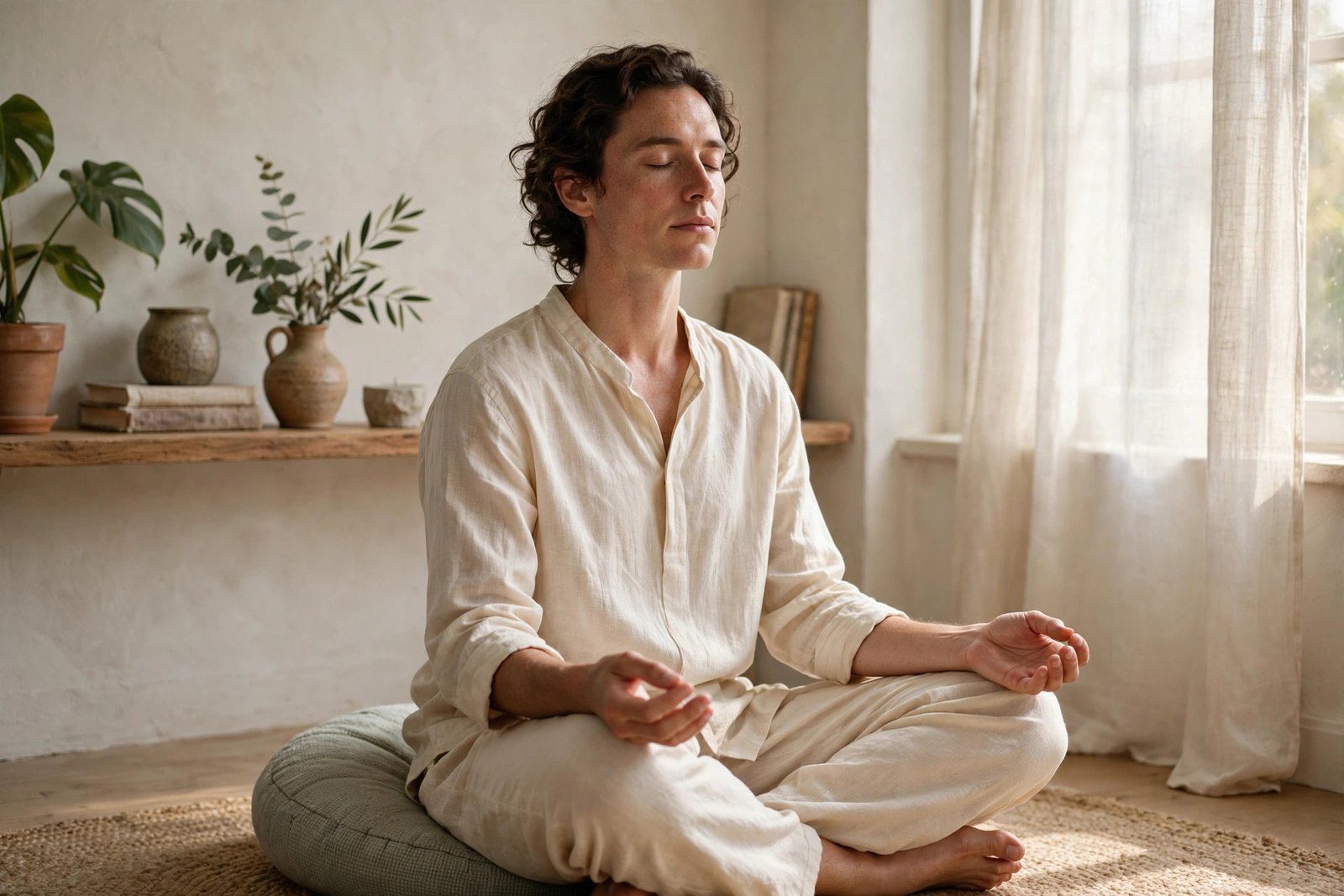
Breathing-focused meditation is often the easiest place to start, because the breath is always with you and gives attention a steady anchor. Sit comfortably with your back supported and your feet on the floor, or lie down if sitting is uncomfortable. Close your eyes if that feels safe, or soften your gaze towards the floor. Breathe naturally, without forcing deep or dramatic breaths, and simply notice the sensation of breathing.
You might notice cool air at the nostrils as you breathe in, the gentle rise and fall of the chest or belly, or the pause between breaths. Choose one of those sensations as your focus, and rest attention there. When you notice the mind has wandered to a worry, a plan or a memory, acknowledge it without judgement and return attention to the breath. That moment of noticing is not a failure. It is the practice working.
If it helps, you can lengthen the out-breath very slightly, breathing out a little more slowly than you breathe in, in a way that still feels comfortable and natural. There is no need to count rigidly or hold the breath. A slow, unforced out-breath often helps the body settle, and many people find it calming when anxiety feels sharp or urgent. If focusing on the breath ever feels uncomfortable or increases distress, stop and try a different anchor, such as sounds around you or the feeling of your feet on the floor.
Breathing practice is also useful outside a formal session. When you notice anxiety rising before a meeting, a journey or a difficult conversation, a few slow, steady breaths can create a small pause. You do not need to close your eyes or find a quiet room. Simply noticing one or two breaths, feeling your feet on the ground, and letting the shoulders drop can be enough to help you respond more calmly in the moment.
Body Scan Meditation
Body scan meditation turns attention slowly through the body, from one area to the next, noticing sensations without trying to change them. It is particularly helpful for anxiety because worry often lives in the body as tension, restlessness or a vague sense of unease that is hard to name. Bringing gentle attention to the body can help you notice that tension earlier and release some of it consciously.
To practise, lie down or sit comfortably and close your eyes if you wish. Begin with the feet, noticing any sensations there: warmth, coolness, tingling, pressure, or perhaps nothing obvious at all. All of these are fine. Move slowly upwards through the legs, hips, belly, chest, hands, arms, shoulders, neck and face, spending a short while with each area. As you notice tension, you might imagine breathing into that area and letting it soften slightly as you breathe out, without forcing relaxation.
Your mind will wander during a body scan, just as it does in any meditation. When it does, gently return to the part of the body you last noticed, without retracing the whole scan or criticising yourself. If a particular area feels painful, numb or emotionally difficult, it is perfectly acceptable to move on, shorten the practice, or choose a different technique that day. Meditation should feel supportive, not like an endurance test.
A body scan can be a helpful wind-down before bed, especially if anxiety tends to surface at night. Practised in bed with the lights low, it gives the mind a calm focus other than the worries of the day, and it helps the body settle towards sleep. If you fall asleep during a bedtime body scan, that is not a problem. Rest is rest, and the practice has still served a useful purpose.
Guided Imagery Meditation
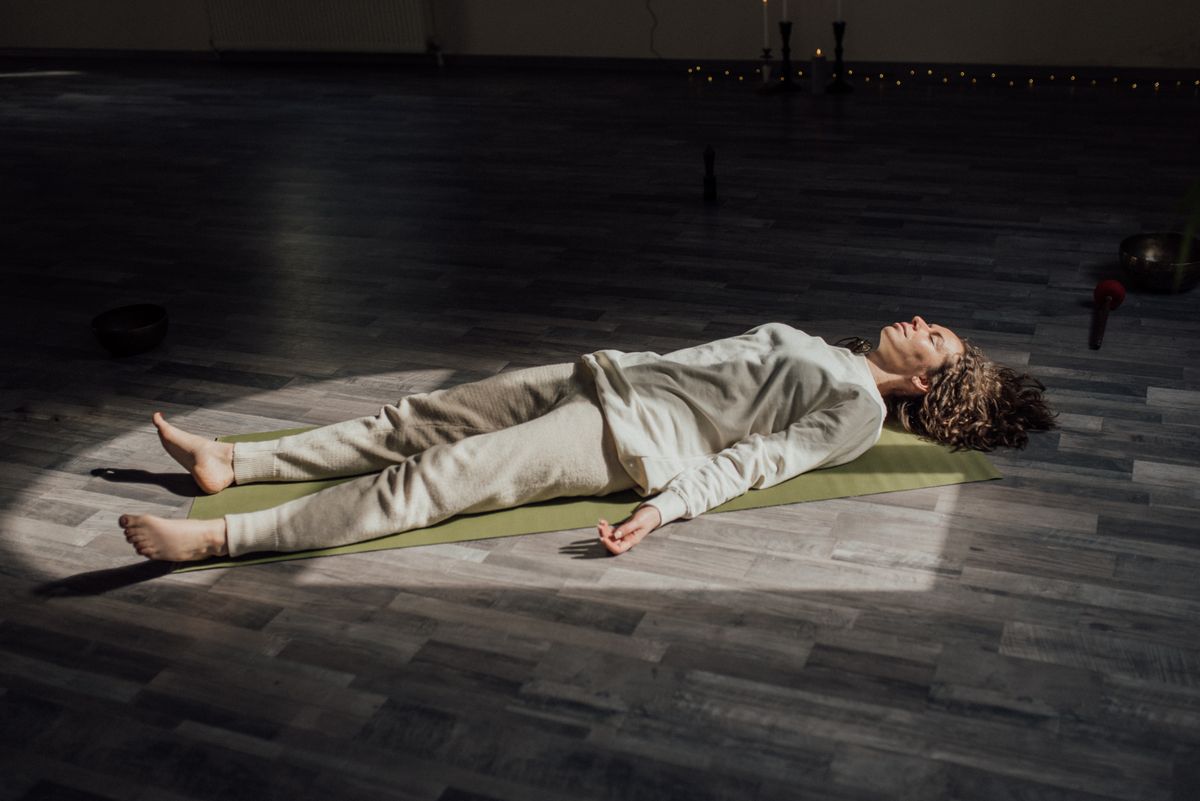
Guided imagery uses imagination to create a sense of calm and safety. Instead of focusing only on the breath or the body, you picture a peaceful place in detail, or follow a spoken guide that leads you through a calming scene. This technique suits people who find silent meditation difficult, because the imagery gives the mind something gentle and absorbing to follow, leaving less room for anxious thoughts to take over.
To try it, sit or lie comfortably and close your eyes. Picture a place where you feel safe and at ease. It might be a real place, such as a favourite beach, woodland path or quiet garden, or an entirely imagined one. Notice the details slowly: the colours and light, the sounds, the temperature, the textures under your feet or hands, and any pleasant scents. There is no need for a vivid, cinematic picture. A few soft impressions are enough, and the image may change or fade, which is completely normal.
You can also use imagery for a specific anxious moment. Before a stressful event, you might picture yourself arriving calmly, breathing steadily, speaking clearly, and handling difficulties as they come. This is not about pretending everything will be perfect. It is about rehearsing a steadier response in your mind, so that when the real moment arrives, calm feels a little more familiar.
Recorded guides can be very helpful for imagery practice, especially at first. A calm voice leading you through a scene removes the effort of guiding yourself and lets you simply listen and imagine. Choose a guide whose voice and pace feel soothing to you, and avoid guides that make promises about curing anxiety or that feel pressured or commercial. A good guide should feel like a gentle companion, not a sales pitch.
Mindful Walking
Mindful walking brings meditation into movement, and it is an excellent option for people who find sitting still difficult when anxious. Instead of walking to get somewhere quickly, you walk slowly and deliberately, paying attention to each step, the movement of the body, and the surroundings. It can be done in a garden, a quiet park, a corridor, or even around a room.
Begin by standing still for a moment, feeling your feet on the ground and noticing your balance. Then walk slowly, noticing the lifting, moving and placing of each foot, the shifting of weight, and the gentle swing of the arms. When the mind wanders to worries or plans, acknowledge the thought and return attention to the steps. You might also notice the air on your skin, birdsong, leaves, or the colours around you, without needing to label or analyse them.
Mindful walking has a practical advantage: it combines two things that help anxiety, namely gentle movement and present-moment attention. Walking itself can ease restlessness and tension, while the mindful focus gives the mind a break from rumination. Even a short mindful walk during a lunch break or after a difficult conversation can help the day feel more manageable.
You do not need to walk mindfully for the whole of a walk. Many people find it helpful to begin a walk mindfully for a short while, then let the walk become more natural, returning to mindful attention whenever worries begin to spiral. That flexible approach makes mindful walking easy to fit into real life, rather than another demanding routine to maintain perfectly.

Mindful Movement and Shared Practice
Meditation and mindful movement often support each other. Slow, attentive movement gives the mind a clear focus, while the breath awareness learned in meditation helps movement feel calmer and more controlled. Yoga, gentle stretching and slow strength work can all become mindful practices when done with attention to breath, balance and bodily sensation, rather than rushed through while thinking about something else.
Practising with another person can make mindful movement feel more enjoyable and easier to sustain. Our guide to partner yoga poses for beginners shows how two people can practise together to improve balance, flexibility and trust, and shared calm practice can be a supportive way to build a wellbeing routine.
Steady, focused movement also trains attention in a similar way to meditation. Our kettlebell windmill guide describes a controlled, rotating movement that develops coordination, balance and mental focus, and it illustrates how staying present through a demanding movement can build the same steady attention that meditation cultivates. As with meditation, start gently, learn the movement slowly, and choose a level that feels safe and controlled.
Building a Small Daily Habit
The benefits of meditation come from regularity rather than intensity. A short practice done most days will usually help more than an occasional long session. The simplest way to build a habit is to attach meditation to something you already do every day, such as after brushing your teeth, before your morning coffee, during a lunch break, or as part of a bedtime routine. When the cue is already in place, you are less likely to forget.
Keep the commitment modest at first. A short daily practice that you can maintain on a busy or difficult day is better than an ambitious target that collapses after a week. If you miss a day, treat it as normal rather than as a failure. Simply return the next day, without trying to make up for lost time by doubling the practice. Kindness towards yourself is part of the practice, not separate from it.
It can help to keep a simple note of your practice, such as marking a calendar or keeping a brief journal entry about how you felt before and after. Over weeks, you may notice patterns: certain times of day work better, certain techniques suit certain moods, or a practice that felt restless at first becomes easier. Those observations help you shape a routine that fits your life, rather than following someone else’s ideal.
Variety can keep a habit alive. You might use breathing practice on busy mornings, a body scan at bedtime, guided imagery when worry feels strong, and mindful walking when sitting still feels impossible. Rotating techniques in this way is not inconsistency. It is responsiveness, choosing the tool that fits the moment, and it often keeps meditation feeling fresh and useful over the long term.
What to Do When the Mind Wanders
A wandering mind is not a sign that you are bad at meditation. It is a sign that you have a human mind. Thoughts about work, relationships, health, money and the future will arise during practice, sometimes within moments of sitting down. The practice is not to prevent thoughts, but to notice them without being swept away, and to return attention gently, again and again.
When you notice you have drifted, try a small, kind sequence. First, notice without judgement: thinking has happened. Second, label it lightly if that helps, such as worrying, planning or remembering. Third, return to your anchor, whether that is the breath, the body, the image or your steps. There is no need to analyse the thought, solve the problem it raises, or scold yourself for having it. You can return to the worry later, with a clearer mind, if it still needs attention.
Some days the mind will wander constantly, and the practice may feel like nothing but returning. Those sessions are still valuable, because each return strengthens the skill of noticing and redirecting attention. Over time, you may find that you notice anxious spirals earlier in everyday life too, and that you can step back a little sooner, before worry gathers full momentum.
If a particular worry keeps returning during meditation and feels urgent or distressing, it may be helpful to pause the practice and write the worry down, along with one small next step you could take later. That act of capturing the concern can reassure the mind that it will not be forgotten, making it easier to return to calm practice. Meditation is not about ignoring real problems. It is about creating enough steadiness to face them more clearly.
Choosing the Right Technique for the Moment
Different techniques suit different moments, and learning to choose well is part of the skill. When anxiety feels sharp and physical, such as a racing heart or shallow breathing, breathing-focused practice or mindful walking may help settle the body first. When anxiety feels like mental chatter that will not stop, guided imagery can give the mind a calmer track to follow. When tension sits in the body, a body scan can help you locate and soften it.
Time of day matters too. A breathing practice or mindful walk can be energising and clarifying in the morning, while a body scan or gentle guided imagery may suit the evening, when the aim is to wind down. Experiment over a few weeks, notice what helps in different situations, and keep a small repertoire of techniques you trust, rather than searching constantly for a new method.
It is also fine to combine techniques. You might begin with a few slow breaths, move into a short body scan, and finish with a calming image. Or you might walk mindfully for a while and then sit for a brief breathing practice. There are no strict rules about purity of method. What matters is that the practice feels supportive, manageable and kind, and that it leaves you a little steadier than when you began.
Common Challenges and Gentle Solutions
- Restlessness: Try mindful walking or a shorter sitting practice, and allow the body to move before you settle.
- Sleepiness: Meditate sitting upright, in daylight, or earlier in the day, rather than lying down late in the evening.
- Self-criticism: Remember that noticing a wandering mind is the practice, not a failure, and return without scolding yourself.
- Lack of time: Use a short daily practice attached to an existing routine, and use brief mindful moments during the day.
- Expecting instant calm: Allow several weeks of regular practice before judging, and notice small changes in steadiness rather than dramatic transformation.
- Discomfort with silence: Use a recorded guide, gentle background sounds, or mindful walking until silence feels more comfortable.
- Strong emotions during practice: Shorten the session, open your eyes, ground yourself with your surroundings, and seek support if distress persists.
When Meditation Is Not Enough
Meditation is a wellbeing practice, not a treatment, and it is important to recognise when more support is needed. If anxiety is persistent, worsening, or begins to affect your ability to work, sleep, eat, care for yourself or maintain relationships, please seek professional help. A doctor can discuss options, rule out other causes, and refer you to appropriate support. There is no shame in asking for help, and doing so is a sign of care for yourself, not weakness.
Meditation can sit alongside professional support, but it should not delay it. If you are already receiving help for anxiety, tell your clinician that you are practising meditation, so they can advise whether it fits well with your care. If meditation ever increases distress, brings up overwhelming emotions, or feels unsafe, stop the practice and seek advice. A technique that helps many people may not be right for everyone at every time, and that is completely acceptable.
If you ever feel in distress, or feel you may act on harmful thoughts, please reach out immediately. Call Samaritans on 116 123 at any time, day or night, for a confidential conversation, or call 999 in an emergency. You do not need to face a crisis alone, and reaching out is a brave and important step.
Frequently Asked Questions
How long should I meditate each day?
Start with a short daily practice that feels manageable, and build gradually only if you wish. Regularity matters more than length, and a brief practice done most days is a strong foundation.
What if I cannot stop thinking during meditation?
You are not supposed to stop thinking. Notice when the mind has wandered, acknowledge the thought kindly, and return attention to your anchor. That gentle returning is the practice itself.
Which meditation technique is best for anxiety?
There is no single best technique. Breathing-focused practice suits many people, body scan helps with physical tension, guided imagery suits a busy mind, and mindful walking suits restlessness. Try each for a while and notice what helps you most.
Can meditation replace professional help for anxiety?
No. Meditation is a general wellbeing practice that can support calm and steadiness, but it is not a substitute for professional help. If anxiety is frequent, intense or disruptive, speak to a doctor or another qualified professional.
Is it normal to feel emotional during meditation?
Yes. Slowing down can bring feelings to the surface that a busy day keeps hidden. If emotions feel manageable, allow them to pass with gentle attention. If they feel overwhelming or persistent, shorten the practice and seek support.
Conclusion
Meditation techniques for anxiety are not about achieving a perfect state of calm or emptying the mind. They are about learning to pause, breathe, notice the body, imagine a calmer place, or walk slowly and attentively, and to return to those anchors whenever worry pulls attention away. Start small, choose a technique that fits the moment, practise most days, and treat a wandering mind with patience rather than criticism. Used alongside good sleep, movement, supportive relationships and professional help where needed, a simple meditation habit can become a steady, kindly part of everyday life, helping you meet anxious moments with a little more space, clarity and calm.

Related Posts